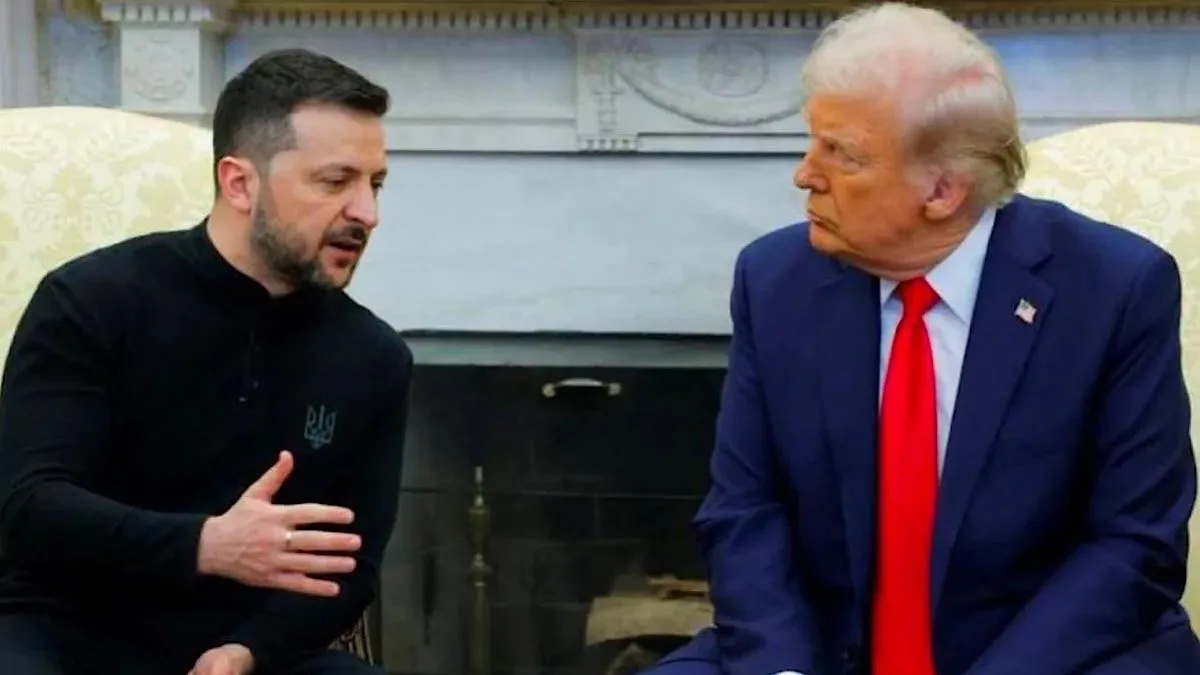
The recent diplomatic flurry ~ marked by talks in Moscow between US envoys and Russia, followed by a three-day session in Florida between US and Ukrainian negotiators ~ was meant to build momentum toward peace. Instead, it has laid bare a fundamental truth: you cannot negotiate peace while bombs keep falling, and you cannot negotiate an outcome when one side has already declared its unwillingness to compromise. On paper, the Miami discussions suggested a path forward.
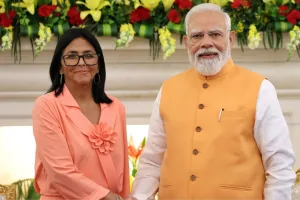
Ukrainian and American officials emerged saying they had discussed “security arrangements” and frameworks for reconstruction ~ a serious signal that Kyiv is willing to plan for a future beyond bullets and burned cities. Indeed, President Volodymer Zelenskyy affirmed his commitment to continued talks. But just as these exchanges concluded, Russia struck again ~ launching drone and missile attacks that hit rail hubs, energy infrastructure, and civilian-lifelines across several regions. At that very moment, the other side of the conversation was broadcasting a very different message: For Russia, peace is not the point ~ dominance is. In a blunt, public interview ahead of his visit to India, the Russian President Vladimir Putin declared that his country intends to seize full control of the eastern region commonly called Donbas ~ “either by force, or when Ukrainian troops leave.” That is not an opening for compromise.
Advertisement
It is an ultimatum. This is the heart of the problem with the current negotiating process: it treats a war ~ one of aggression and occupation ~ as though it were a dispute over legal points on a map. It assumes parity, consent, and a shared interest in stability. But Russia, by its own words and by its own bombs, has shown it neither recognises parity nor seeks a stable mutual peace. What it seeks is victory. Yet the discourse remains framed as if Russia, Ukraine, and mediating powers sit at a roundtable with equal weight. That framing is dangerous: it gives legitimacy to demands born out of force, not consent. A “peace plan” that presupposes territorial concessions is not a plan; it is a settlement imposed under duress. True peace cannot begin with a ceasefire held together solely by hope and diplomacy. It requires mutual cessation of violence, credible guarantees, and verifiable withdrawal from occupied zones, not promises of good behaviour. Attempts to talk while Russia ramps up attacks do more than delay justice: they give war criminals the veneer of diplomacy.
If the international community and Kyiv proceed with negotiations, they must condition talks on actions, not words. They must demand an immediate and sustained halt to all offensive operations. They must insist on irreversible, observable de-escalation before any discussion of security architecture, reconstruction, or territorial status. Anything less will be a dangerous illusion. The war would pause but the threat would remain. And history tells us: such truces breed future conflict, not lasting peace.